Forestry Mulching Services in Montrose, MI
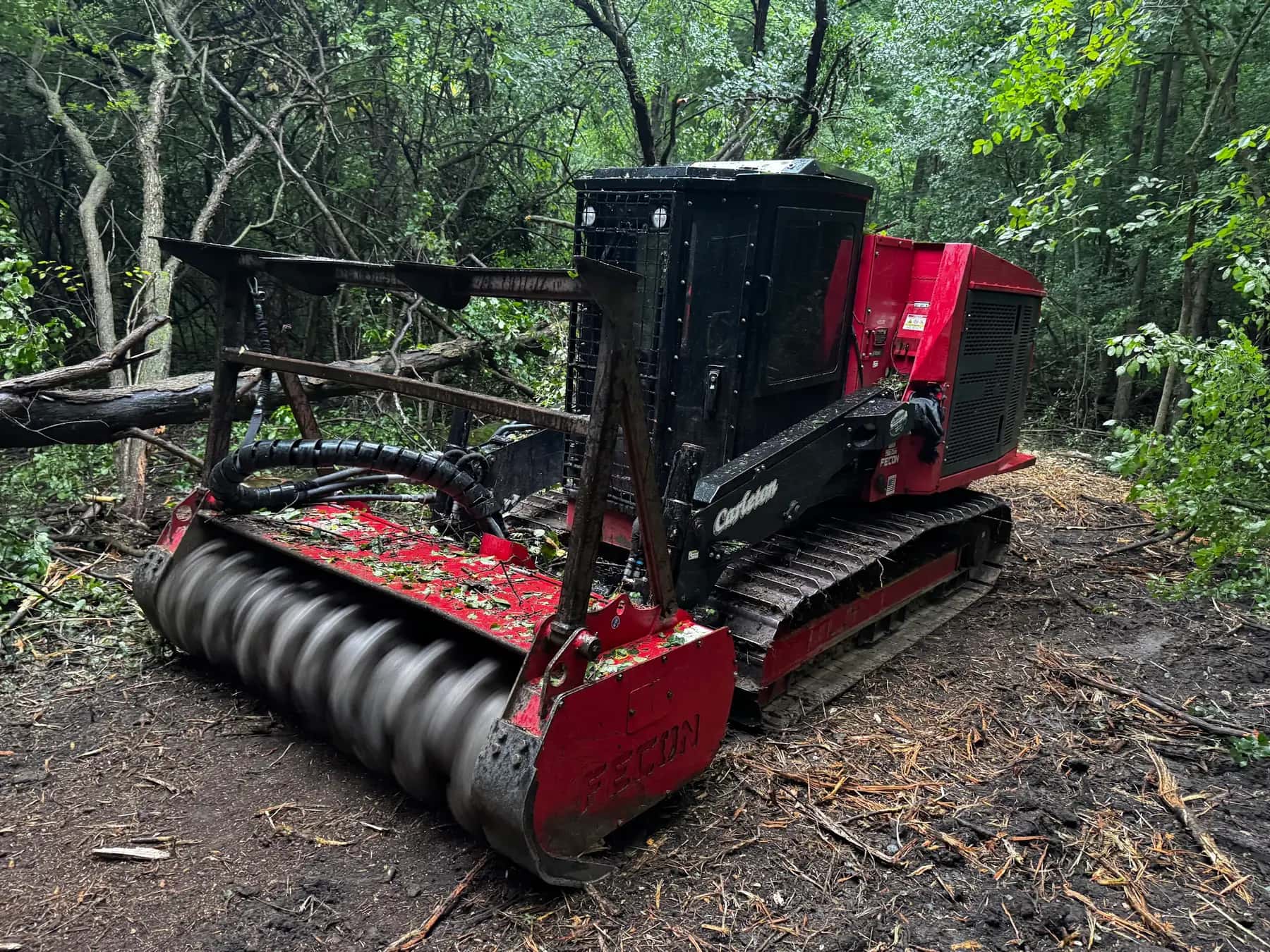
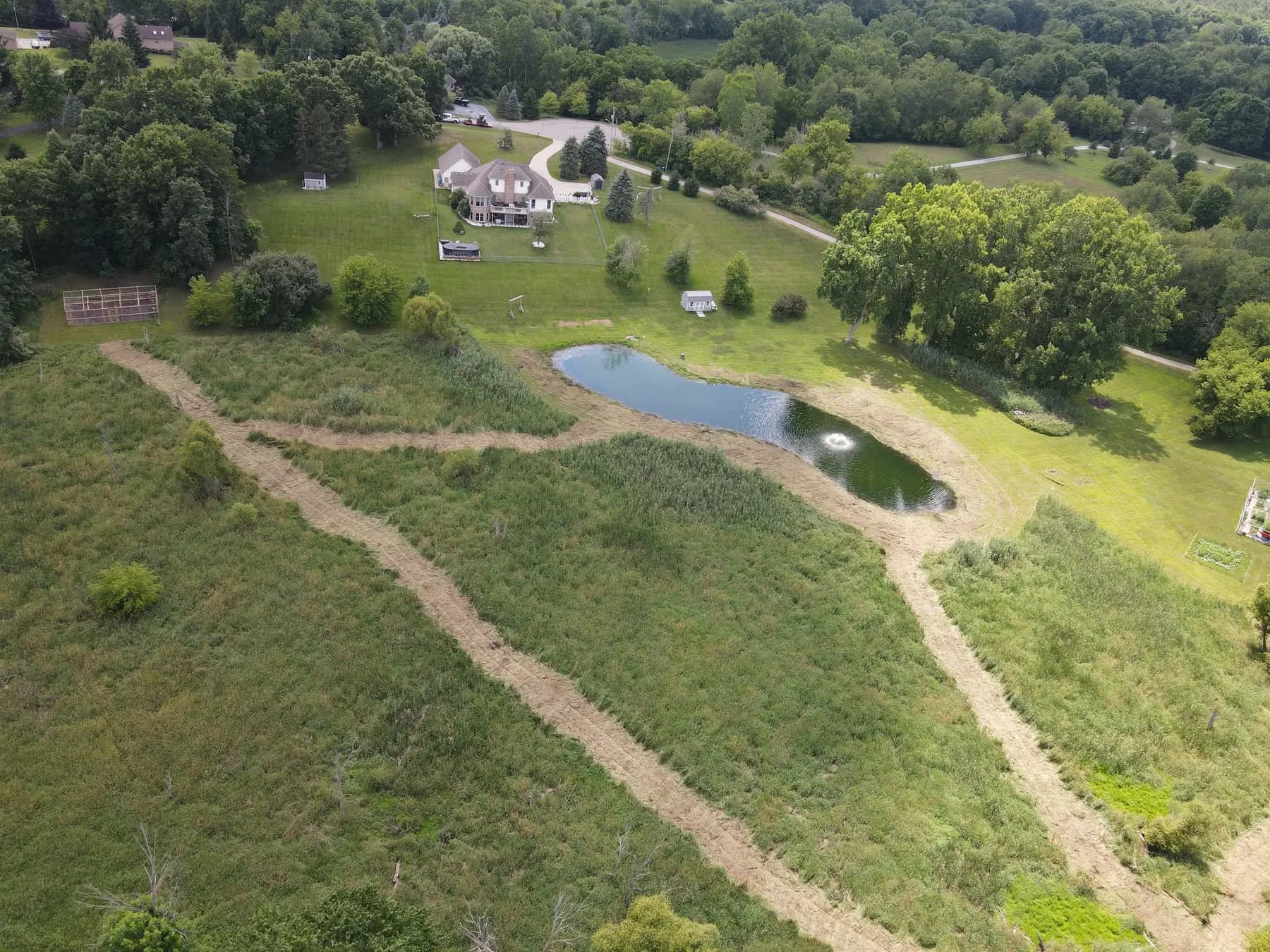
One machine cuts standing brush and small trees and grinds them into a layer of mulch that stays on the ground. No brush piles to burn, no trailer loads to haul off.
One pass. No burn piles. No trailer loads to haul off.
- Owner-operated since 2019
- Free on-site estimates
- About an hour around Montrose, MI
Overgrown land around Montrose rarely gets that way overnight. Buckthorn and autumn olive fill in a fence line, poplar saplings take over a back field, and within a few seasons you can't walk the property line you paid for. Forestry mulching fixes that in a single pass: one machine cuts standing brush and small trees and grinds them into a layer of mulch that stays on the ground. There are no brush piles to burn and no trailer loads to haul off. Onyx Land Clearing and Excavation has been clearing property across northern Genesee County since 2019, from river lots along the Flint River near Barber Park to horse pastures out toward Metamora. Call Michael at (810) 955-4752 for a free forestry mulching estimate.
What Forestry Mulching Actually Involves
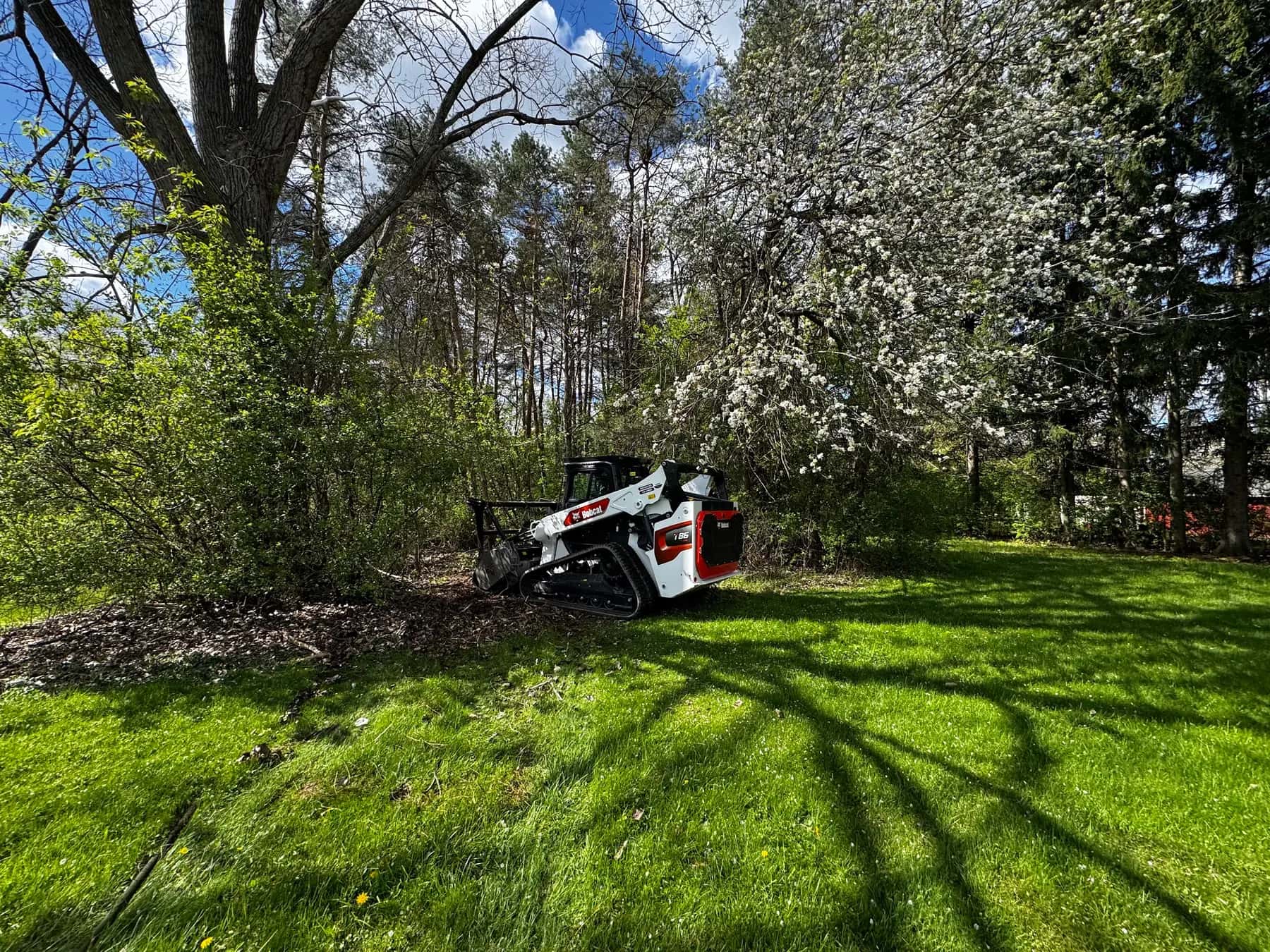
Forestry mulching is a land clearing method that cuts, grinds and spreads unwanted vegetation in one step, using a hydraulic mulching head instead of a chainsaw crew, a dozer and a burn pile. The starting point is usually a wall of brush, honeysuckle and saplings so thick you can't tell where the woods end and the yard begins. The job opens with a walk of the property to flag keeper trees, boundaries and anything buried near the surface. Then a Bobcat compact track loader fitted with a forestry mulcher works through the area. The mulcher is a steel drum lined with carbide-tipped teeth spinning at high speed; it's lowered onto standing brush and saplings, chews them down from the top, then takes the stumps to about ground level. Anything too big for the mulcher is dropped and handled separately. Because the machine rides on rubber tracks, it spreads its weight and ruts the ground far less than a wheeled machine or dozer, which matters on soft ground after a wet spring. What's left is a layer of shredded wood that holds the soil in place, keeps mud down and breaks down over the next few seasons. You go from land you can't use to open ground you can walk, mow, fence or build on.
Our Forestry Mulching Process
Walk the Property With Michael
Michael meets you on site and walks the area you want cleared. Together you flag the trees you want to keep, mark property lines and fences, and note wet spots, septic fields and shallow lines like invisible dog fence or irrigation. If there are oaks in the work area, he'll talk through timing, because Michigan's oak wilt risk runs from April 15 to July 15. This walk is where most surprises get caught, before a machine ever touches the ground.
Get a Written Estimate
You receive a written estimate that spells out the area to be mulched, what stays standing and what the finished ground will look like. Price is driven by how dense the growth is, the size of the trees, the terrain and how far the site is from Montrose. Estimates are free, and a third-party financing option is available if you'd rather spread out the cost. There's no pressure to decide on the spot.
Set Boundaries and Protect Keeper Trees
On the day of the job, Michael unloads the track loader and re-checks every flag against the estimate. Keeper trees get a buffer so the mulcher doesn't scar their trunks or tear up the roots near the surface. Any tree over the machine's safe cutting size is dropped and dealt with separately. Working from the boundaries inward keeps the edges clean and straight instead of ragged.
Mulch the Brush and Saplings
The mulching head works each section from the top down: saplings are brought down and ground, then the machine makes cleanup passes over stumps and leftover debris until the ground is covered in an even mat of mulch. Along fence lines and around keeper trees, Michael slows down and works the edges carefully rather than plowing straight through. The material stays right where it fell, so nothing has to be hauled off your property.
Final Walkthrough
When the mulching is done, you walk the site with Michael and compare it to what was flagged at the start. Anything missed gets touched up while the machine is still on site. You're left with open, usable ground under a mulch layer that protects the soil while grass and native plants come back through it. If the next step is a driveway, building pad or pond, Onyx also handles excavation and site work and can quote it while he's there.
Serving Montrose and the Surrounding Area
Onyx is based in Montrose Township, in the northwest corner of Genesee County, and most forestry mulching jobs fall within about an hour's drive. That takes in the farm parcels and river lots along M-57 between Chesaning and Clio, wooded acreage around Flushing and Grand Blanc, and the woodlots and horse properties around Lapeer and Metamora. Michael regularly runs east toward Lake Orion and Ortonville and west toward Owosso, and larger multi-day jobs farther out are always worth a call. It's all part of the work that Onyx Land Clearing and Excavation has been doing across mid-Michigan since 2019.
The ground here shapes how the work gets done. Much of the back acreage in this part of the state stays soft well after the snow melts, so a tracked machine that doesn't dig, push or strip the soil is the right tool; mulched ground recovers much faster than ground a dozer has scraped. The most common jobs are old fence rows grown solid with buckthorn, grapevine and box elder, followed by walking trails, hunting lanes and food plot openings in the wooded tracts north and east of Montrose.
Onyx is owner-operated. Michael Lee started the company in December 2019, and when you call, you talk to him, get your estimate from him and watch him run the machine on your property. No salesperson hands your job to a crew you've never met, and the person who walked the site with you is the same one deciding how close to cut around your favorite oak. You can learn more about Michael and how Onyx works.
The equipment is Bobcat, serviced through a local dealer Michael has worked with for years, which keeps downtime short when a hose or a set of teeth needs replacing mid-season. Mulching also keeps Onyx out of the burn-pile business: no smoke drifting into the neighbors' yards, no waiting on the right weather to light a pile and no charred mess left on your lot.
Timing matters in Michigan, and it's where experience shows. The Michigan DNR advises against cutting or wounding oaks from April 15 to July 15, when sap beetles spread oak wilt, a disease that can kill red oaks within weeks. Research from MSU Extension found that the beetles are most likely to be carrying spores in late spring and early summer, which is exactly when many people want their land cleared. On properties with oaks you want to keep, Michael schedules around that window or keeps the machine well clear of them.
Forestry Mulching FAQs
Forestry mulching is usually priced by the acre or by the job, and the number depends on how dense the growth is, the size of the trees, the terrain and access. A quarter acre of light brush and a full acre of mature buckthorn thicket are very different jobs. The only way to get a real number is a free on-site estimate.
A mulcher mounted on a compact track loader is built for brush, saplings and smaller trees. Larger trees can be dropped and handled separately, or left standing and worked around. If your property has a lot of big timber, Michael will tell you at the estimate instead of surprising you on the day of the job.
Yes. The mulch holds moisture and protects the soil, and grass and native plants usually come up through it during the first growing season. If you want lawn or pasture, you can broadcast seed right onto the mulch; late summer into early fall is a good window for cool-season grasses in Michigan. Resprouting brush like buckthorn will try to come back, so a mow or spot treatment in the first year keeps it from taking over again.
It stays on the ground and breaks down over the next several seasons, depending on the type of wood, how thick the layer is and how much moisture it gets. Nothing gets burned and nothing gets hauled away, which is a big part of why mulching often costs less than traditional clearing.
It's one method of land clearing. Mulching removes brush and small trees but leaves root systems in the soil, which is ideal for trails, fence lines, views and reclaiming overgrown acreage. If you're building a house, driveway or pole barn, the stumps and roots usually have to come out, which is a full land clearing job with an excavator.
Get a Free Forestry Mulching Estimate
If you've got a fence line you can't find, a back field going to brush or a lot you want opened up, call Michael at (810) 955-4752 (Mon–Fri 8 AM–5 PM · Sat 8 AM–3 PM), or send your project details online and he'll get back to you to set up a walkthrough.