Lapeer sits in the upper Flint River watershed. The river's headwaters are just north in Columbiaville, and it runs right through the city. Add Lake Nepessing, Pero Lake at Torzewski County Park and the ponds and wet pockets scattered across the Lapeer State Game Area, and a lot of properties here are within 500 feet of a lake or stream. That distance matters: under Michigan's Part 91 rules, earth changes that close to water generally need a soil erosion permit no matter how small the job, so we flag it during the estimate instead of after the machine shows up.
Our trailer runs M-24 through the heart of the county, hops on and off I-69 at the Lapeer Road exit, and spends a lot of time on the county roads in between: Davison Road, Imlay City Road, Vernor Road out by the state game area, Sutton Road and Hollow Corners Road. We know which approaches can take a loaded trailer and which roads get soft, so access is planned before the job starts.
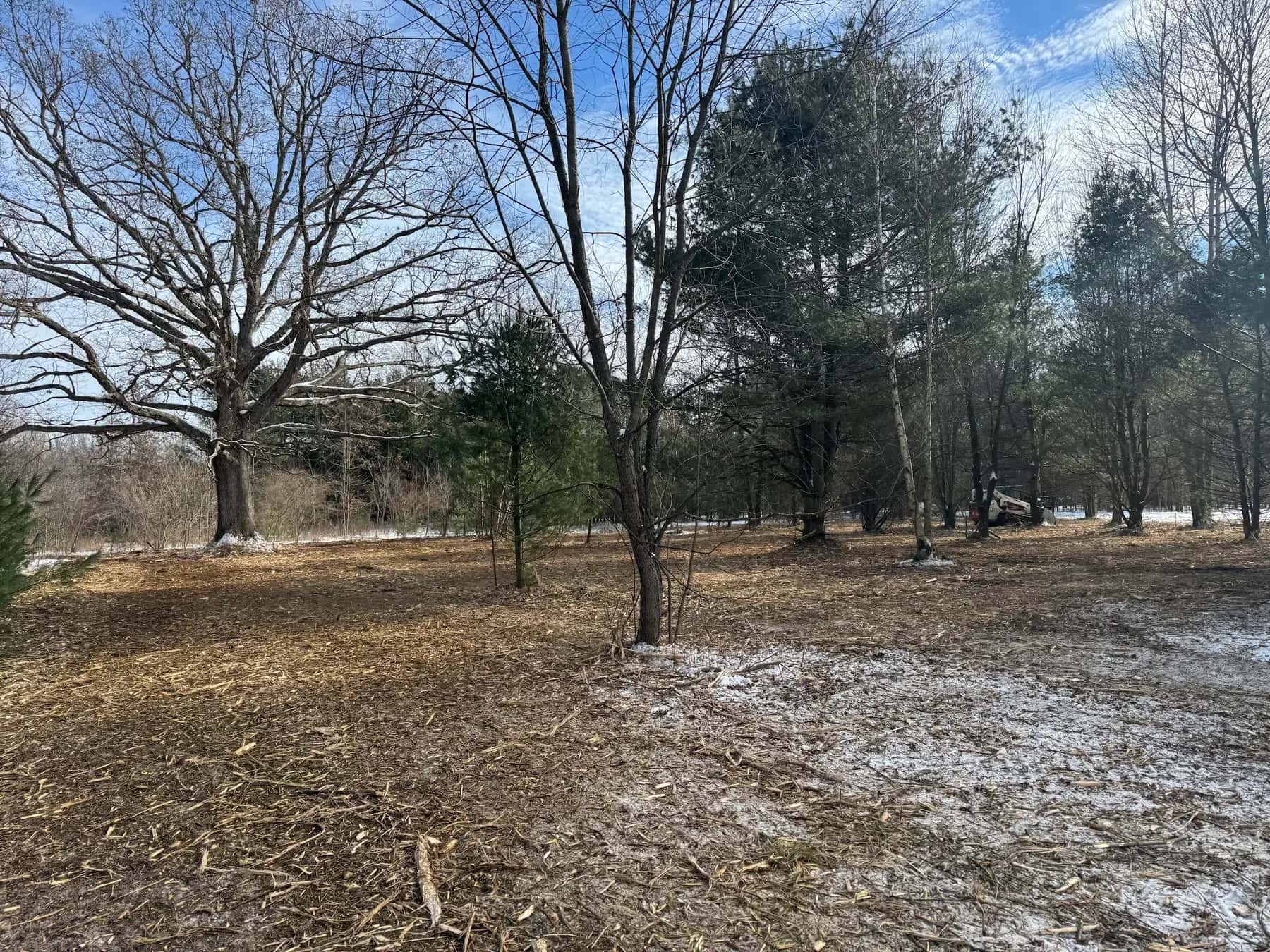
Most Lapeer work falls into a few patterns: opening up wooded acreage for a new home or pole barn in Lapeer, Mayfield or Elba township; reclaiming old fields and fence rows on the farm ground that has always driven this county's economy; and stabilizing sloped lots on Lake Nepessing and along the river with retaining walls. In town, around the downtown blocks near the Pix Theater and the old courthouse, the jobs are smaller: brush-choked backyards, drainage trenches and wall repairs where there's no room for a big machine to make mistakes.
On the regulatory side, the Lapeer County Health Department is the county's soil erosion enforcing agency, and a permit is generally required for any earth change of one acre or more, including clearing trees and stumps to get a lot ready to build, which the state says is not exempt logging. We also time oak work around the Michigan DNR's April 15 to July 15 oak wilt window, and we plan spring hauling around the seasonal weight restrictions county road agencies post each March through May.