
Residential Excavation
Site prep and grading for homes, garages, pole barns and additions around the property.
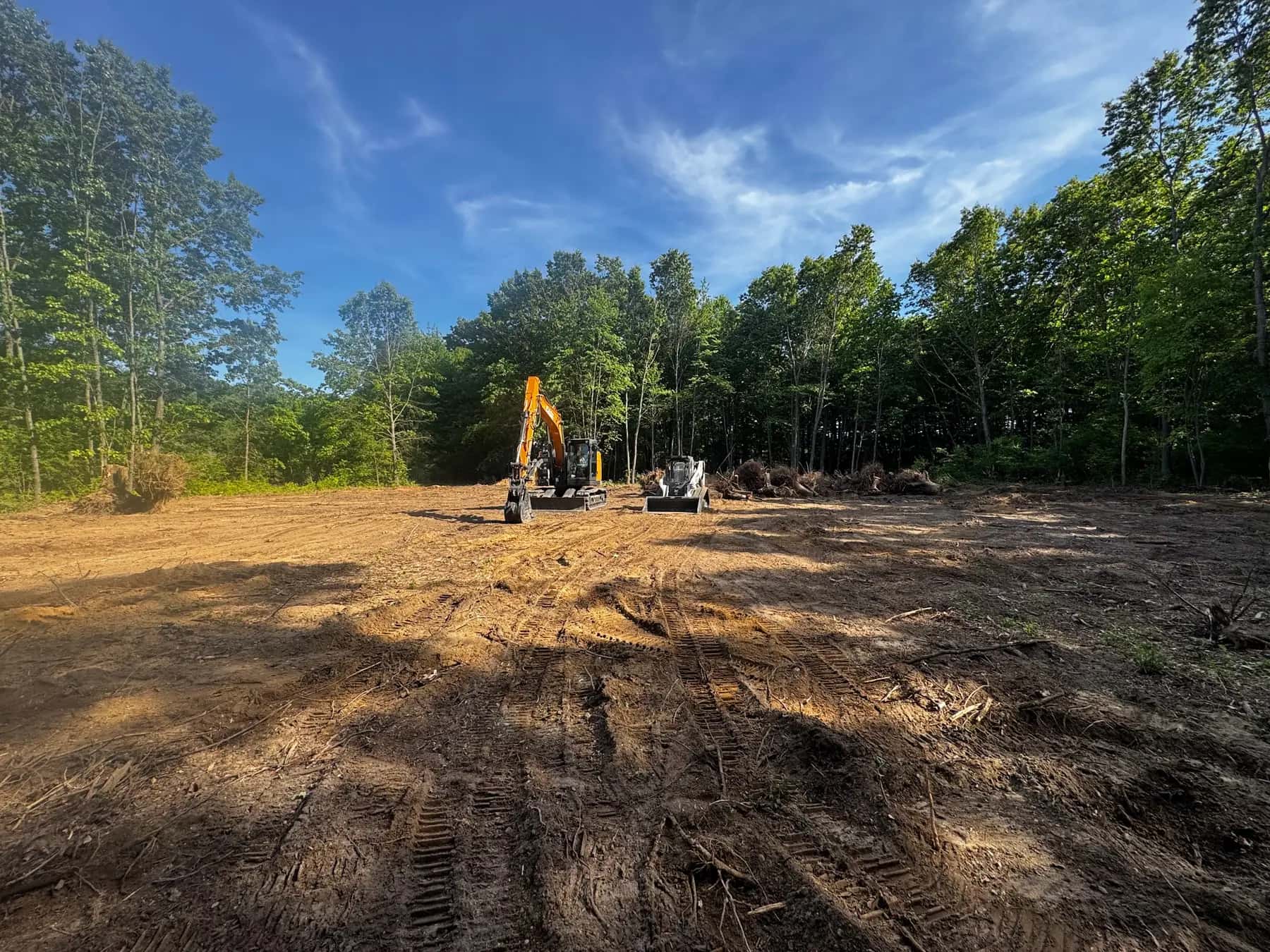
Basements and foundations, footings for pole barns and garages, utility and drainage trenches, driveways and site grading. The person who quotes your job is the person digging it.
Dug to plan, by the person who quoted the job.
Every building project starts with a hole in the ground, and how well that hole is dug decides a lot about what sits on top of it. Onyx Land Clearing and Excavation provides residential and commercial excavation out of Montrose, MI: basements and foundations, footings for pole barns and garages, utility and drainage trenches, driveways and site grading. Owner Michael Lee runs the machine himself, so the person who quotes your job is the person digging it. From new builds along M-57 to additions in Flushing and Grand Blanc, call (810) 955-4752 for a free excavation estimate.
Excavation is the controlled removal and placement of soil to the depths and grades a project calls for, whether that's a full basement, a footing trench, a utility line or a driveway base. It starts with raw ground and a set of plans or stakes, and nothing that tells you what's buried underneath. Before a bucket goes in, a MISS DIG ticket is filed and the legal start date is honored so utility owners can mark their lines. Topsoil is stripped first and stockpiled separately so it can go back on the finished grade instead of getting buried in backfill. Then the excavator digs to the elevations on the plan, with depth checked as the work goes. In Michigan, exterior footings have to sit at least 42 inches below grade to stay beneath the frost line, so even a simple garage footing is deeper than people expect. Spoils are stockpiled for backfill or hauled off, and trenches are cut for water lines, conduit or drain tile. After the foundation is in, the site is backfilled and rough-graded so surface water runs away from the building. The end result is an excavation that is the right size, depth and shape for your concrete crew, and a finished grade that sheds water instead of sending it into your basement.
Michael goes over your plans or builder's stakes and walks the site to look at soil, slope, access and where spoils can be stockpiled. He also looks at where a concrete truck and a dump truck will need to get in and turn around. Catching access problems now saves a lot of expensive standing around on dig day.
You receive a written estimate that covers the dig, trenching, backfill, grading and what happens to extra soil. Once the job is scheduled, Michael files a MISS DIG ticket and waits for the legal start date, which Michigan law sets at least three business days out. Near marked lines, the soil is exposed by hand before the excavator works close to them.
Topsoil comes off first and goes into its own pile. The excavator then digs the basement, footing or pad to the depth on the plan, with a little extra room around foundation walls so the footing crew and waterproofer can work. Depth and floor grade are checked throughout, because a basement dug six inches too shallow or too deep causes problems all the way up the build.
Trenches are cut for water service, electrical conduit, drain tile and downspout lines as the project requires. Deeper trenches are sloped or shored as required under MIOSHA's Part 9 excavation and trenching rules, because a trench collapse is one of the most dangerous things that can happen on a job site. Lines are bedded properly so they don't settle and crack after they're buried.
Once the foundation walls are ready for backfill, the soil goes back in layers and gets packed, instead of being dumped in all at once to settle later. The ground is shaped to slope away from the house, and the saved topsoil is spread back over the top. You're left with a finished grade ready for seed, sod, a driveway or a patio.
Site prep and grading for homes, garages, pole barns and additions around the property.
Clean, controlled trenches for water, electric, drain tile and downspout lines.
Dug to the depth and footprint your builder's plans call for, for new builds and additions.
Onyx digs basements, footings and trenches throughout northern Genesee County and the neighboring counties, from Montrose and Clio along the M-57 corridor down I-75 to Flint and Grand Blanc, west to Owosso, south to Howell, east to Lapeer and southeast to Lake Orion. Most jobs fall within about an hour of Montrose, and larger projects farther out are worth a call. See the full range of land clearing and excavation services in Montrose, MI.
Local ground conditions are a big part of doing excavation right here. Much of mid-Michigan sits on dense glacial soil that holds water, so basements and crawl spaces need good drain tile and a backfill plan that doesn't funnel water toward the walls. Frost is the other factor: with footings required at 42 inches, a shallow shortcut that looks fine in August can heave by February. Spring thaw also raises groundwater in low areas, which affects when and how deep a basement can be dug.
With Onyx, the estimator, operator and project manager are the same person. Michael Lee has run the company since 2019, and he's on your job from the first site visit through final grade. When your builder has a question on dig day, the person who can answer it is sitting in the machine. Read more about Michael and how Onyx works.
One contractor for the whole site saves time. Onyx can clear the lot, dig the foundation, trench the utilities, backfill and grade, so there's no waiting between companies. That includes land clearing before the dig and retaining walls where a sloped lot needs them after it. The equipment is Bobcat, backed by a local dealer's service department, so a breakdown doesn't turn into a week-long delay.
Excavation in Michigan comes with legal requirements, and following them protects you. State law requires a MISS DIG notice at least three business days before excavation, and the Michigan Residential Code requires exterior footings to extend 42 inches below grade. Onyx builds both into every schedule, so your inspection passes and nobody hits a buried line.
Foundation excavation cost depends on the size and depth of the dig, soil conditions, whether extra soil stays on site or gets hauled off, site access, and how much backfill and grading is included. A full basement costs more than a crawl space or slab footing because of the volume of soil moved. Onyx provides free, itemized estimates after looking at your plans and the site.
The Michigan Residential Code requires exterior footings and foundations to extend at least 42 inches below grade so they sit below the frost line. The local building official can adjust that for specific conditions, so always follow what your permit and inspector call for. Onyx digs to the depth on your approved plans.
Yes. Michigan's Public Act 174 requires anyone digging, including homeowners, to notify MISS DIG 811 at least three business days, and no more than 14 calendar days, before starting. On Onyx jobs, Michael files the ticket and waits for the legal start date, so you don't have to.
Once utilities are marked, digging time depends on the basement's size, the soil and the weather. Backfill and final grading happen later, after the foundation walls are poured and ready. You'll get a schedule with your estimate that lines up with your builder's timeline.
Yes. Onyx works for homeowners, builders and commercial property owners, including site prep, pads, trenching and grading. For projects outside the usual hour-radius, multi-day jobs are the best fit.
If you've got plans in hand or just a lot and an idea, call Michael at (810) 955-4752 (Mon–Fri 8 AM–5 PM · Sat 8 AM–3 PM). You can also send your excavation project details online and he'll follow up to schedule a site visit.